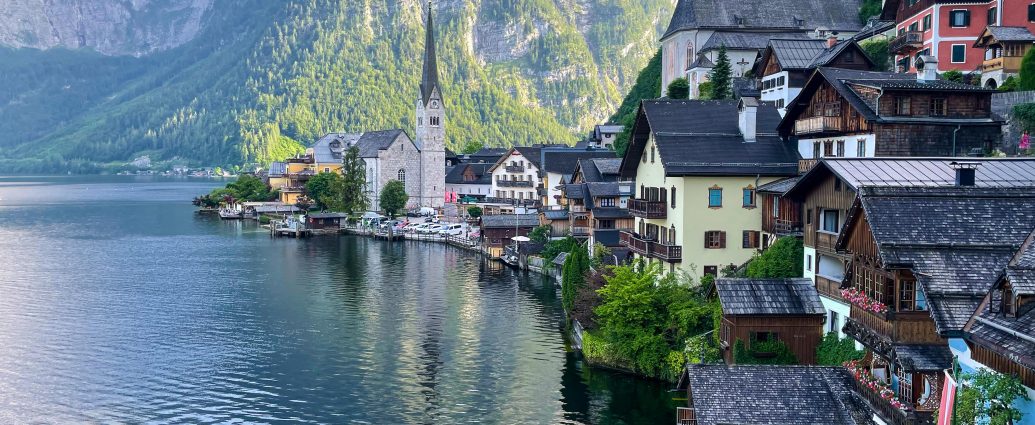
47.562°N 13.649°E
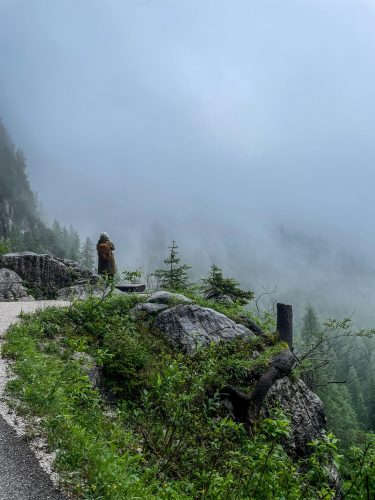
You have seen Hallstatt before even if you don’t realise it. Throughout the 50s and 60s people gave each other tins of biscuits or boxes of chocolate at Christmas or birthdays and the picture on the front of the tin was Hallstatt. These tins are still lurking around today, which is why you will recognise the featured photo in this post. When you arrive at the hotel and your room is not ready, they send you to the marked spot at the Northern end of the town where everyone can take the traditional panorama. It is necessary to queue for an opportunity.
Salt
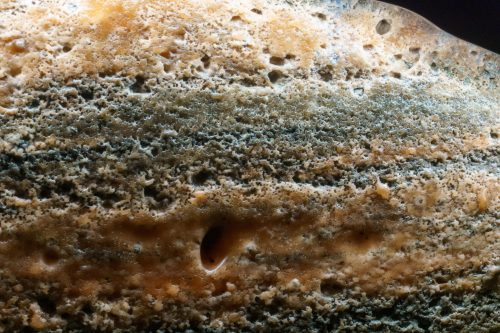
The main reason Hallstatt exists is, of course, not just to provide chocolate box pictures for thousands of tourists to Instagram every day. Hallstatt is the town supporting and supported by salt mining and it has been for 7,000 years. The people running the tours of the mine claim it is the oldest salt mine in the world. If it is not, it is in the top two or three along with the other Austrian salt mines. The mine is 360m above the town – accessible by cable car followed by four hundred steps – and from that point the original mine dug by hand is over 200m deep. The men mined the salt, the children packed it into sacks and the women carried the sacks of salt on their backs strapped to their head to deliver them to the stockpile at the entry of the mine.
From here the salt was moved to Hallstatt and then down the river Traun and on to the Danube for distribution far and wide. Now it is sent as a slurry in a pipeline out to salt processing works out of the area. In fact, one of the oldest pipelines in the world was constructed to pump brine out of the mountain in the Middle Ages.
Hallstatt had salt. Everyone wanted it and paid for it with glass, ivory metal and all sorts of daily essentials. Archaeological investigations suggest that they even started downstream processing with larger troughs used for salting pig carcasses. Makin’ Bacon.
Such a lucrative industry could not remain independent for long and it seems the Hapsburgs in Vienna managed to take control of this and other salt mines in Austria to help enrich the crown as opposed to the miners. It shocks me a little to realise that in the Schoenberg Palace, one of the ceiling panels in the main reception area was decorated with symbols of each of the main entities in the empire. For example, Hungary was represented by the beef industry. Austria was represented by salt.
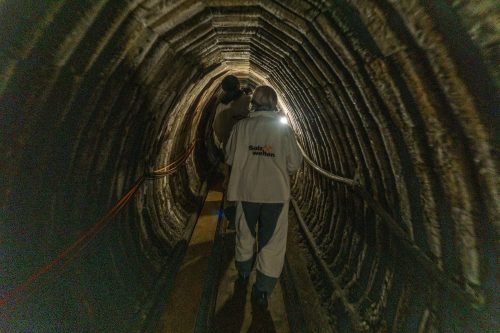
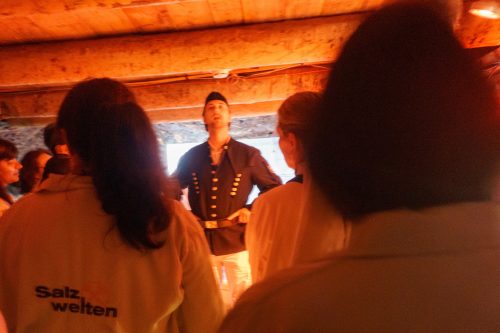
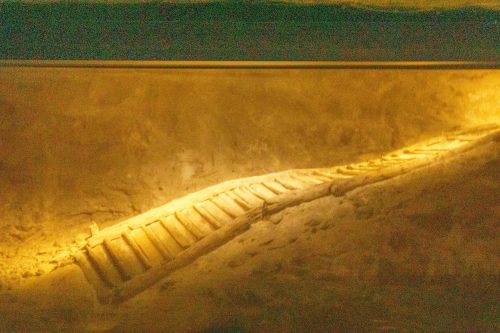
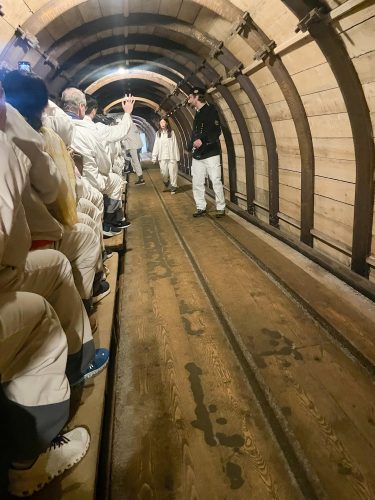
We visited the salt mines – appropriately dressed for a comfortable 8 degrees Celsius and slid down the miners slides between the mining levels, saw the oldest existing wooden staircase in the world and rode the train out again. That staircase, discovered in 2003 is 3,250 years old – preserved by none other than the salt.
We even bought some salt!
Ice Cave
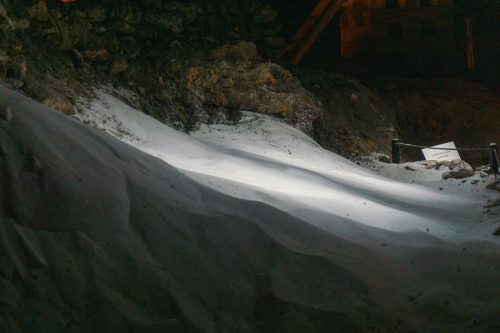
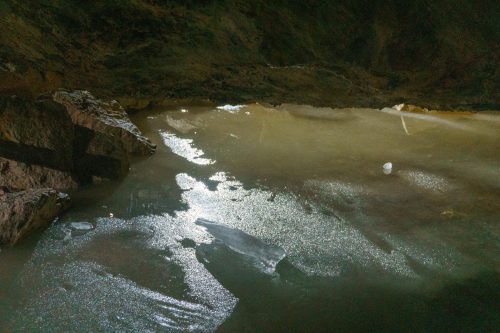
The other must visit in the area is the Ice cave. It takes a bus ride and a cable car up the mountain followed by a brisk hike up the steep slopes to the entrance of the cave to partake of the experience. The area is normally a ski resort in winter, so you can imagine how steep the path is! The current ice in the cave is around 500 years old and is currently in a recession phase. Over the millennia it has gone through several phases of attrition and recovery.
It is cold!



Sisi
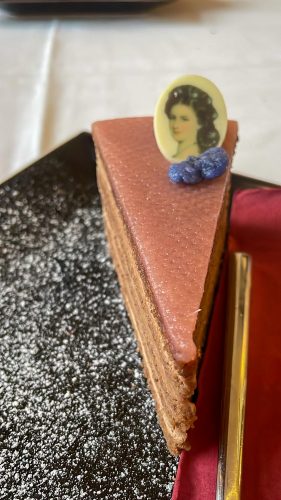
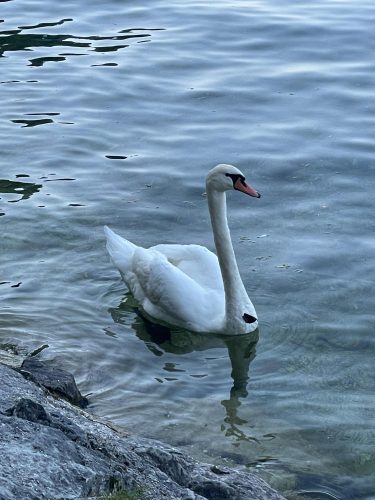
Other highlights of Hallstatt include the inescapable Sisi. Actual name is Elizabeth. She was born Duchess Elisabeth Amalie Eugenie in Bavaria on 24 December 1837 and died by assassination in Geneva, Switzerland. She was Empress of Austria and Queen of Hungary from her marriage to Franz Joseph I of Austria. She was also a mega star and has at least three movies and two series (the most recent in Netflix) charting her life. Franz Joseph and Sisi chose Hallstatt for their honeymoon. They found the place nice but lacking in swans, so the lake was immediately populated with swans which remain part of the local fauna. She also liked chocolate cake, and you can now eat chocolate cake with her picture on it.

Landslides
The town may be picturesque, but it is also perilous.
The whole town is built on the sediment at the bottom of the steep mountain slopes. The sediment comes from millions of years of landslides which don’t go away just because there is a settlement at the bottom. See the problem? The next landslide ends up on top of the town. It did exactly that in 400AD wiping out the whole settlement, but the value of the salt in the mountain soon encouraged people to rebuild and exploit the available wealth. Today there are extensive works up the hill from the settlement to divert, capture and stabilise any potential landslides. So things remain more precarious than you would guess from the relaxed ambiance. But the salt, and now the tourists, are too valuable to talk about it.
Bits and Pieces
Some other points of interest about Hallstatt. There is a church up on the hill which has been there since the early 1400’s. The obscure point of interest is that the same woman was used as a model for a statue of Mary at the entrance and a picture on the altar decoration.

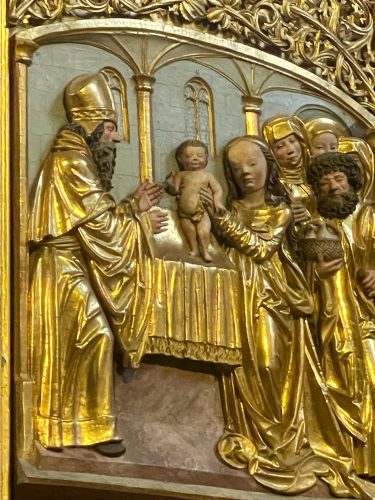
The church has an interesting, and surprisingly not old graveyard. The reason behind that is that there is not a lot of room in Hallstatt, so once you have occupied your grave for a reasonable time, you bones are dug up, decorated and placed in the ossuary out the back.



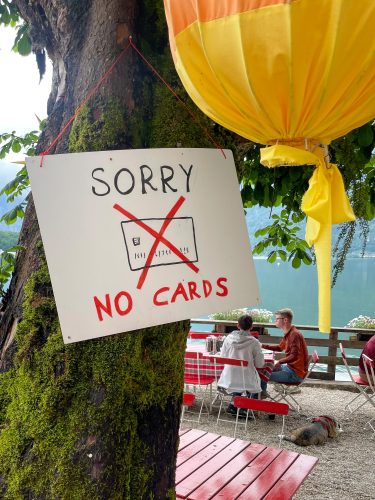
You can’t spend money, only cards and if you are a vegetarian, you are offered toast. I suppose it is strictly vegetarian.

A nice little place and worth a few days visit.