
49°38′20″N 1°37′30″W
Street Names
The first thing I noticed when we walked into the old town of Cherbourg-en-Contentin was the surprising street names. Rue Louis XVI roi de France de 1774 á 1792. In a country which is proud of the revolution of 1789 and of releasing itself from the heavy hand of the ancien régime, it is hard to imagine that a town would have a street named after the deposed, executed king.
But here it is!

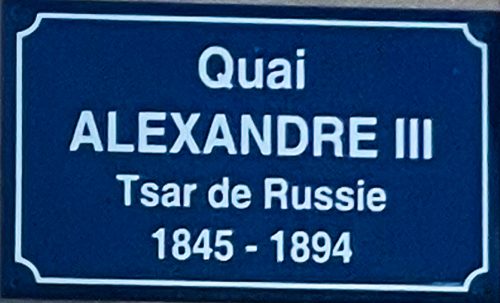
Not only that, but around the corner is the Quai Alexandre III Tsar de Russie 1845-1894 and further down the road we come across a Rue Louis-Phillippe who was the king for a while after the restoration of the monarchy post revolution.

The backstory is that Cherbourg is a deep-sea port, the front line against the Atlantic and in particular, the British, – as indeed is the whole coastline – and has various fortifications and harbour works constructed and demolished over the centuries, particularly after the return of Cherbourg to French control from the English in 1450. While there were many proposals to construct more significant protection for the town under the various Louis (XIII to XV), it was Louis XVI who eventually commissioned the works that now grace the coastline. The king came to visit the Cherbourg port of war in 1786 and is honoured with a street named after him as a result. There were not many kings visiting Cherbourg over the centuries.
Tsar Alexandre III visited in the late 1890s along with President Carnot of France to celebrate the newly signed Franco Russian Treaty which was constructed of several agreements signed over the period 1891-1894. They saw an exhibition of French ships in Cherbourg Harbour and a fireworks display. The street on one side of the Quay was re-named for the Tsar and the street on the other side of the Quay, where our hotel was located, was renamed for President Carnot. We re-lived those glory days by passing from one to the other over the passerelle throughout our stay.
King Louis-Phillippe honoured the city with a visit in 1833 for five days at the beginning of September. This visit was the last visit of a King to Cherbourg and resulted in a major painting and the issue of silver and bronze medals to mark the event. He visited ships under construction and the work underway to build the fortifications.
It was, in fact, Napoleon who really drove the development of Cherbourg as a Naval Port and defensive front line against the British. There is no Napoleon Street – he did, however, show up in the art gallery.

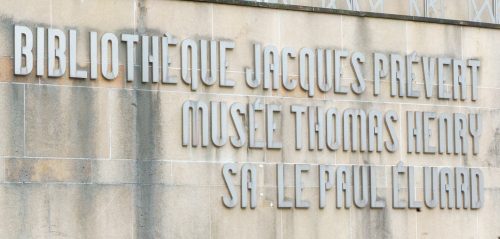

Who ever is responsibile this is a piece of the famous sea walls and defences. They seem to be lasting.
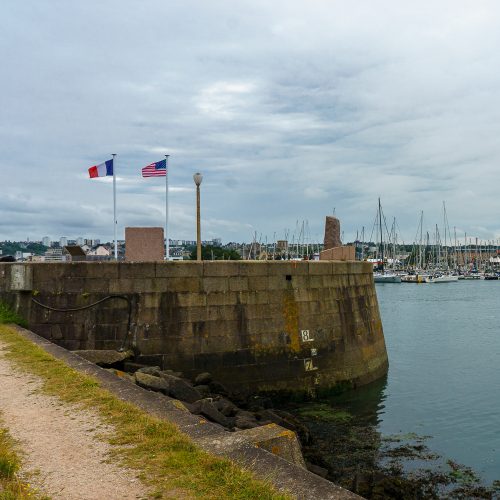
I am looking forward to having a street named after me in Cherbourg as I spent more time there than either of the kings and more than the President and the Tsar. And Rue McGlynn would be less confronting than one named after an executed king.
Shipbuilding
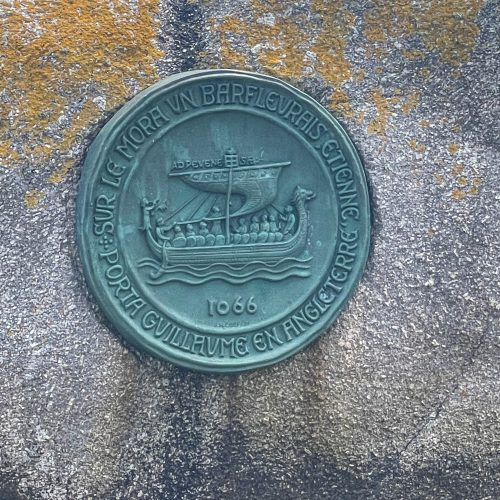
These are not the only kings who are honoured with street names in Cherbourg. Boulevard Guillaume le Conquérant is a major by-pass road around the city. It ostensibily celebrates the fact that the ships for William’s visit to England in 1066 were build here and launched from here on their campaign. However, the pressures of competition for tourism result in contestation of these claims especially by the good burghers of Barfleur just around the coast at 49°40′16″N 1°15′48″W or about two lighthouses away in the local measurement system. There is claim here in plaques and cryptic signs which would have us believe otherwise.

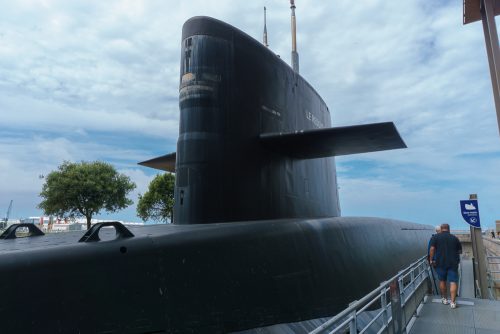
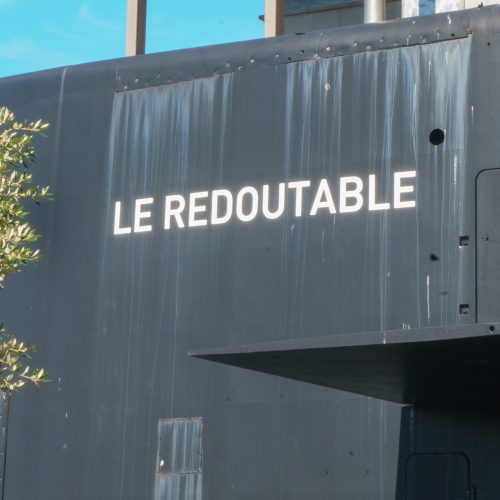
With the defensive harbours and the proximity to the sea and a loyal workforce (see street signs above) Cherbourg became a major ship building centre for the navy. It could have been a major ship building centre for the Australian navy but we all know what happened. One of the ships build, maintained, supported, and decommissioned happens to be the submarine Redoubtable built here between 1964 and 1967 (seems quick given the AUKUS timetable). It is now on display at the Cité de la Mer (museum of all things marine), which therefore has a more powerful submarine fleet than Australia will have any time in the next 10 years.
It was awesome to be up close to such a piece of engineering excellence, sobering to realise that the 16 nucelar arms on board (while it was in service) contained more fire power than all the bombs dropped on Europe in the Second World War and comforting to know that they were never needed. It was also scary to realise that the replacements are even more deadly – and numerous!
The attention to detail in the design was meticulous. Everything on the submarine was optimised for low sound generation including the propeller that powered the vessel around the ocean. I also reflected on the power of the submarine driven by analog controls and paper charts with needles as you can see in the pictures below.


Cherbourg and the Cité de la Mer are not only famous for their role in threatening civilisation and life on earth, Cherbourg is the last place the Titanic stopped before it headed off on its date with the iceberg and Cité de la Mer has an excellent exhibition to make money from commemorate the fact.
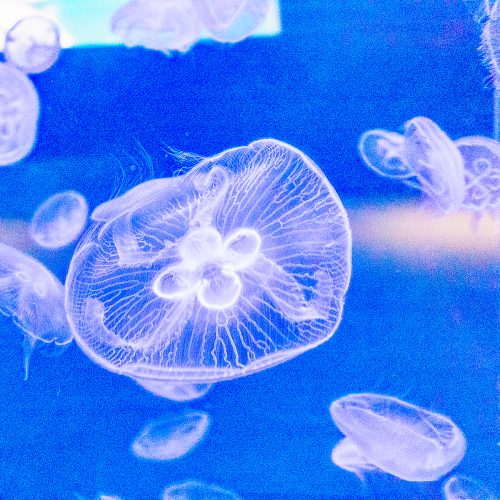
The Cité de la Mer also has some nice jellyfish.


Umbrellas
Appropriately for a town which has a reputation for almost continuous rain – even though we had four of five fine days – Cherbourg is famous for umbrellas, and movies about umbrellas. The Contentin tourism web page describes the historically rainy and windy climate and continues…..
“With their strong character the Normans created the famous Cherbourg Umbrellas, true and timeless pieces and fashion accessories”
That is not an invitation I could ignore, and so found myself touring the Cherbourg Umbrella factory and pondering over my choice of “L’accessorie indispensable”.

… and what a choice! Unforunately, I could not make up my mind and so left umbrellaless, but still had my €500 in my pocket and did not risk leaving such a masterpiece on the bus next time it rained.
Faced by competition from the rest of the world who can produce an umbrella that you can buy, use once and throw away the Cherbourg Umbrella Corporation went up market and speciality. The upmarket means that their umbrellas are hand made, using silk and other fancy materials. Speciality means they now manufacture the Para Pactum umbrella which is designed as “a protection device for eminent people” particularly when they are leaving unpleasant surroundings like a law court or even a gaol. There is now bullet proof version. If you have to ask how much it costs you are not eminant enough.
I don’t know if it was clever marketing or a happy coincidence, but in 1964 the movie “The Umbrellas of Cherbourg” hit the screens. It was a simple romantic tragedy staring Catherine Deneuve with a backgorund of the Algerian War. The movie was widly celebrated, received prizes and is still talked about today. I have never heard of it. Well I have now because 61 years later the locations for filming around Cherbourg are still celebrated like the one below.

And the Rest
There is more to Cherbourg than the Cité de la Mer, umbrellas and strange street signs.
There are boats – many of them!

There are impromptu bike races and vacent moorings and some of the biggest seaguls I have seen.

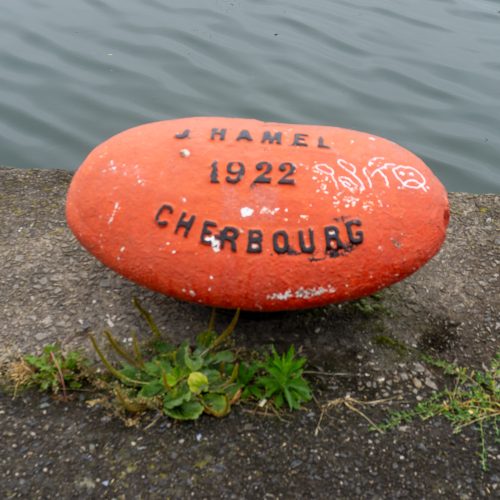

And there are ferries to catch to take us to Ireland.

But before heading away there is still the all important lighthouse tour around the coast. That is up next!