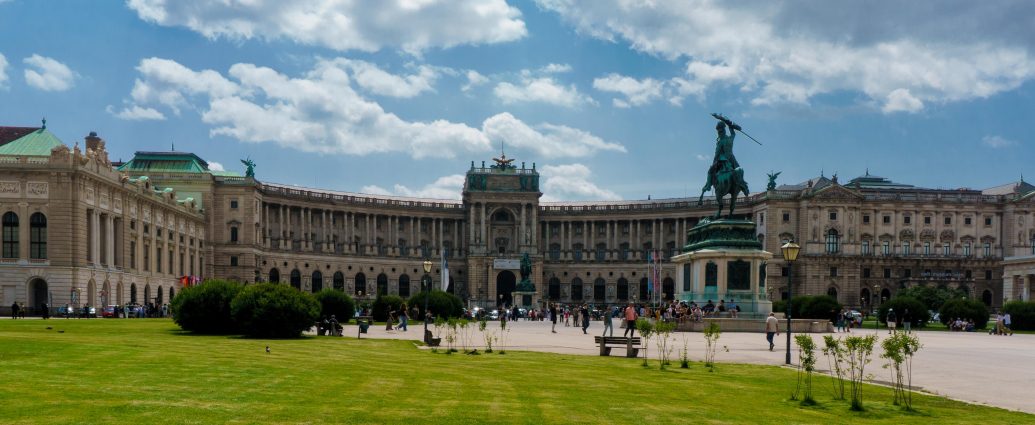
48°12′30″N 16°22′21″E
Music
If there is theme to Vienna it must be music. Wherever you find yourself across the city there is a reminder that this is the city of choice for Beethoven, Mozart, and Brahams. The list is much longer. If you read the Hollywood Boulevard type stars around the streets, you will find other familiar names such as Franz Listz , Gustav Mahler, Joseph Haydn and Antonio Salieri. This all without even mentioning Johann Strauss II who has a gold statue and infinite glory for producing the Blue Danube Waltz.
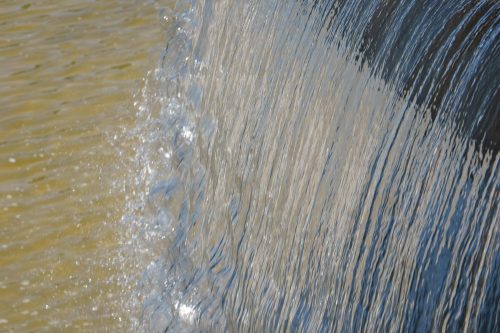
That brings me to my first surprise. Whenever I hear the word Danube I automatically add the modifier “blue”. You can imagine my surprise when I first set eyes on Vienna’s famous river and saw this:-


Not so blue. I guess the Green Danube is not so fancy.
That does not take away from the original fascination with music.
We started our main exploration of Vienna at the Karlsplatz SBahn station which delivers passengers to the front door of the Vienna Opera house and into the arms of many young men dressed in the style of Mozart (wigs, red coats etc.) who would like nothing better than to sell you a ticket to the opera performances available on whatever day you happen to be available. That is the second surprise – there are generally two performances of the opera each day, every day, all the time and you are almost compelled to visit one. We had secured tickets to the Barber of Seville before leaving Sydney, thinking we had somehow grabbed a rare opportunity. Perhaps it was not so rare! It was good, and it is probably an essential activity for anyone visiting Vienna for the first time.The building is no Sydney Opera House and it probably does not rate with any of the great opera houses of Europe – I am thinking of Paris and Milan in particular in this context. However, for sheer productivity it has no equal.
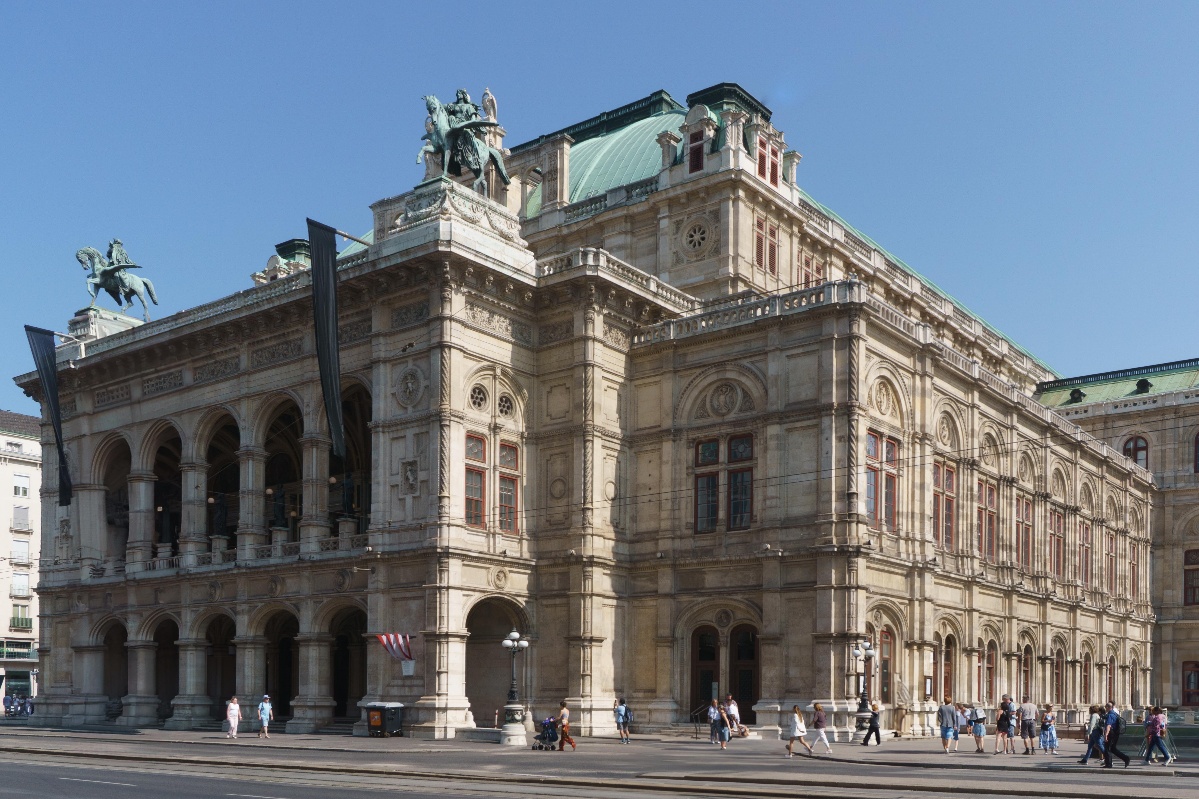
Music is everywhere. Whenever we walked from our apartment to the metro, we came across performers young and old carrying cellos, trumpets and violins heading off to one of the music schools or practice areas which were dotted around the area we were staying in. Almost everywhere we went we saw musical instrument shops, small musical theatres and of course the Vienna Opera whenever we arrived at Karlsplatz.
Karlsplatz and Otto
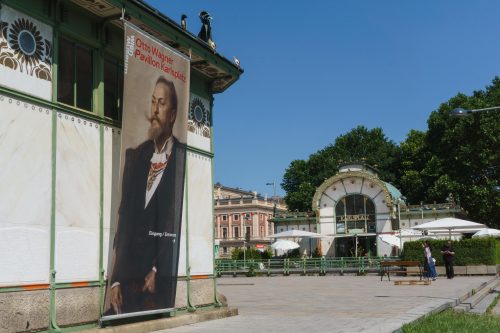
Karlsplatz has its own special features. Importantly, it is an example of the work of Otto Wagner an architect who spanned the end of the 19th century up until his death in 1918 in a building he designed! His work is all over Vienna but for some reason, the entry to the Karlsplatz metro station (now a café) is held out as one of his finest achievements. The entry we used through the underground shopping centre and equipped with lifts and air conditioning was my preferred access, but I am sure I do not represent the majority here.
Horses
One of the reasons we visited Vienna this time was to see the performance of the Lipizzan Horses. Dominique had long wanted to see them and following a visit to Royal Andalusian Riding School of Jerez in June 2024 we decided to include Vienna in our itinerary just to see the Viennese version. This long term traditional activity in Vienna was actually imported from Andalusia by Charles II, Archduke of Austria. He had been living in Barcelona and loving it while trying to lay claim to the Spanish Throne. However, he was called back to Vienna in 1711 to take up the job as Emperor of the Austrian Hapsburg lands after his elder brother Leopold I had died of smallpox. He was crowned as Emperor Charles IV, lost the opportunity for the Spanish Crown when the French pulled out of an agreement with him, and was left sullenly pining for Barcelona. To compensate, he turned the Viennese court into a replica of the Spanish court and imported a large number of horses to start the Spanish Riding School in Vienna. According to the guide he walked them across the alps, losing half of them in the process. That is the one we visited both in a tour in the afternoon and for a performance in the evening!
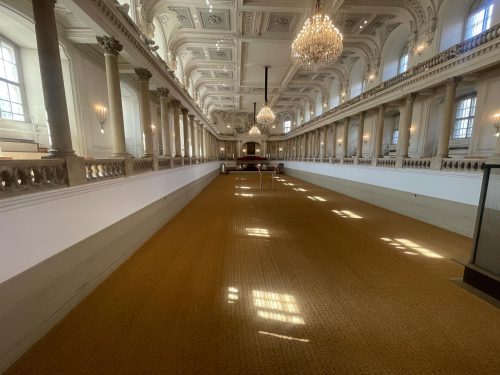
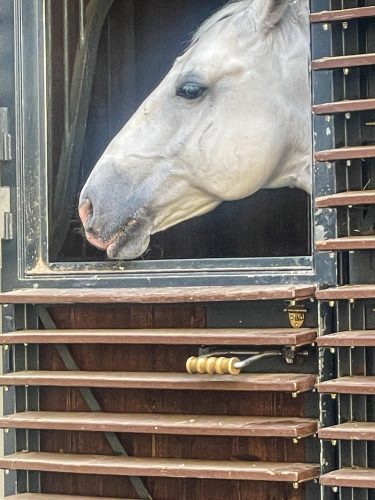
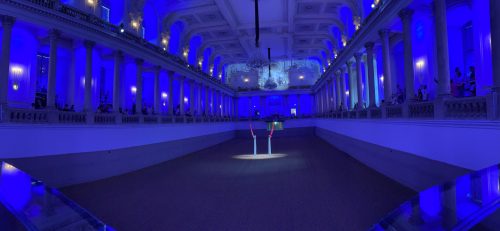
Unfortunately we could not take photos while the horses were performing as they are easily distracted in what are difficult manoeuvres. Surprisingly, last year in Spain there was no such restriction.
St Stephan’s Cathedral

St Stephan’s Cathedral in Vienna has suffered and recovered from the ravages of war several times. Indeed, the tower was used as a lookout in the Austria Turkish War (all of them) and suffered bomb damage in the Second World War. According to the tourist information it has become an “iconic emblem for the city’s identity and a symbol for the reconstruction of the Austrian Republic after World War II”. We dutifully climbed the 343 steps (I counted both ways and came up with different numbers) to the top of the tower which houses a shop selling post cards.
Inside the Cathedral there are charges to enter the main area, so everyone just stands at the back and takes selfies.
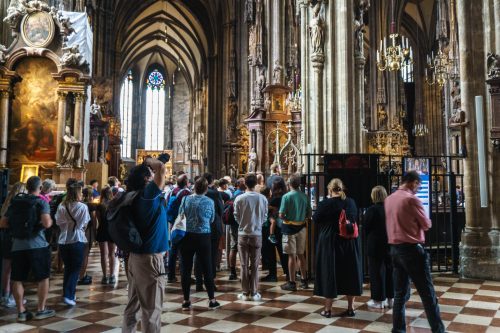
The third surprise was our disappointment with the Cathedral and the good company we kept. We were not greatly impressed by what was on offer so did not part with the funds to enter the hallowed inner sanctum. We felt a little uneasy about our underwhelming response to the building known as “Steffl” – who knows why – but felt our judgement was supported by most of the Hapsburg monarchs who chose to be married, buried (at least their hearts) and crowned in the Church of the Augustinian Friars just down the road. They preferred the intimacy and the design, as did we!
There are some interesting aspects of the Cathedral. Firstly, the roof tiling is colourful and extensive. Secondly, from the top of the tower it is possible to see an outline of the cathedral which is marked in the pavers below. I have saved you the trouble of walking up 343 steps to confirm this by including the photos below.


Parliament
The most striking thing about the parliament building in Vienna is the size. Our guide pointed out that the parliament was established to represent the people of an empire of around 90m inhabitants but today it meets the needs of the 9m Austrians who are represented there. As a result, there is plenty of room to go around – even enough for the historical first chamber to be kept as a monument while the two houses of parliament meet in other chambers.
It was originally built in 1883 to house the two chambers of the Imperial Council (Reichsrat), the legislature of the Austrian part of the Austro-Hungarian Empire which was set up by the Emperor Franz Josheph. It was decorated with the understated style of the time and so you run into the occasional chandelier and other ornament.
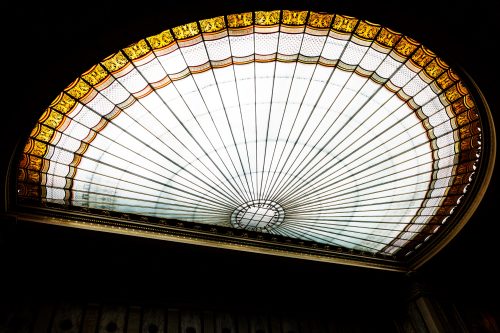
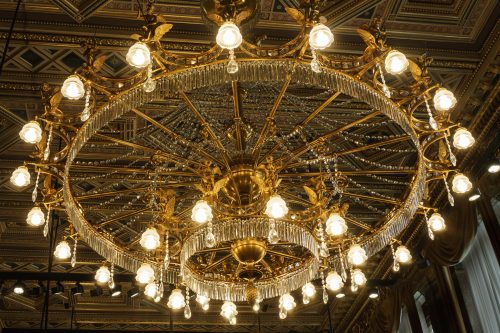

The historical chamber is impressive.

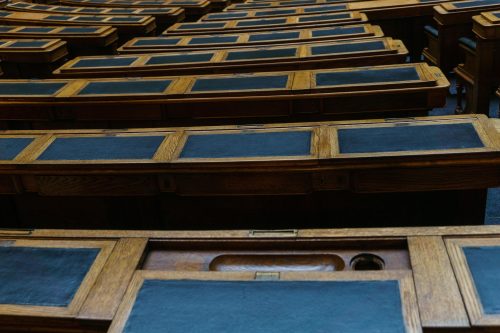
In spite of the impressive building and the detailed description by a very good guide, I was most impressed by an incidental encounter with a photograph on the wall of one of the public areas.

This was the image of Archduke Franz Ferdinand and his wife Sophie on 24 June 1914 (a week short of one hundred and eleven years to the day of our visit!) setting out on the motorcade which would be their last. The title was “Before the last drive”.
It is a reminder that this building has been at the centre of many significant events, from the first establishment of representative democracy in Austria and its empire, to the events of that month prior to the World War I, to the establishment of a republic at the end of the war in 1916, followed by the slow fall of democracy into fascism in the 1930s and the re-establishment of democracy after World War II. It was not lost on me that Ukraine was part of the Austro-Hungarian empire, and is only a short distance to the East of this building, while at the same time the slow march of the Far Right is trying to take hold of this very parliament.
Austrian National Library
The Austrian National Library was one of my favourite visits in Vienna. The library was founded in the 1400’s and made public in the 1700s and is now the home of more than 12 million items over its various collections. The oldest tomes are housed in the State Hall, and Google Culture recommends a visit to view the ceiling of the entrance hall.

While it is impressive in its own right, for me it paled into insignificance in comparison to the books inside.
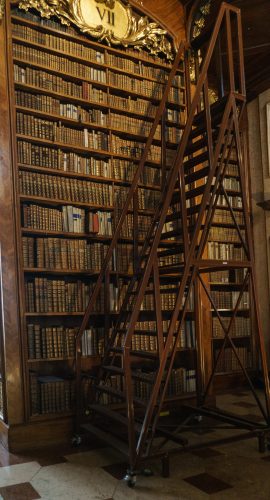
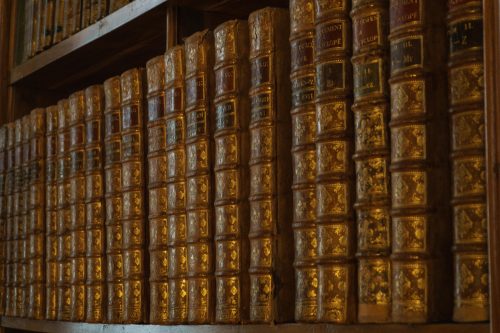
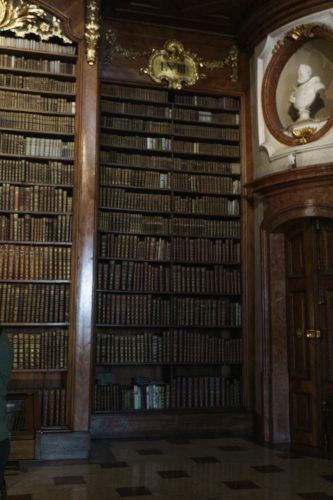
As an added bonus it was staging an exhibition of photographs “A Century in Pictures 1926-2025” which documented much of the social history of Austria over this extraordinary one hundred years.
Schönbrunn Palace
Schönbrunn Palace was the summer palace of the Hapsburgs and a particular favourite of Maria Theresa – long term ruler of the empire and mother of sixteen children eight of whom ended up ruling places around Europe and two of them became Emperor of the Austrio-Hungarian Empire. There are two possible tours of the palace – the Sisi tour and the Maria Theresa tour. We chose MT. She ruled the place for forty years so she earned our respect.
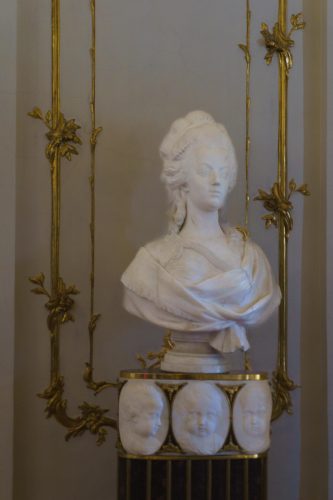
We saw her bed, her work room and a bust of her daughter Marie Antoinette – a successful diplomatic marriage of a 15-year-old to the king of France, but one that did not deliver in the long run. Her taste in decoration for her work rooms was simple and based on nature, so it is a little surprising that the ceiling of the entrance hall was so ornate. I guess it is all for show.
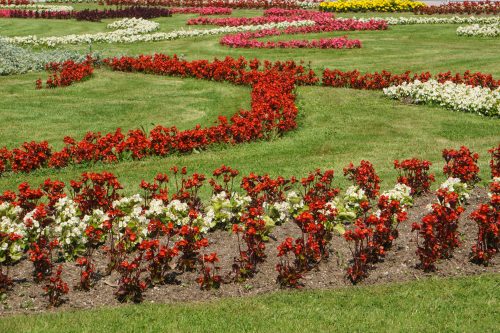
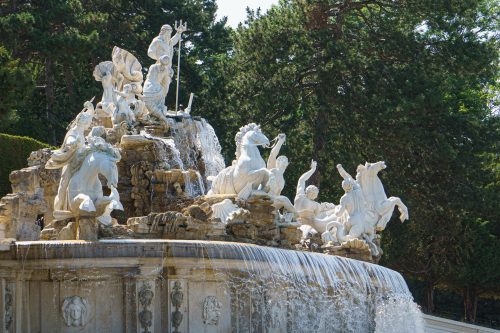
MT particularly enjoyed the gardens, fountains and music, so it was appropriate that we spend some time outside in the extensive grounds. The Austrian Gardens seem to be designed to look at from a distance in order to capture the overall patterns. Up close the flowers are not individually impressive.


Overall, the palace is impressive – in this picture, however, it is partly obscured by the temporary stage set up for the sold-out concert of the Vienna Philharmonic Orchestra on the following Friday evening. I did not get the invite.

Art, Fountains and other wonders
There is much more to Vienna than you can see in a week. There is plenty of art and we had a quick look through the major collections. In particular, the Kunsthistorisches Museum is described by the Vienna City App as one of the most important collections in the world. It was opened by Franz Joseph I in 1891 and at the time housed the Hapsburg Royal art collection. While the building is impressive and the collection extensive, I have only two comments.
The first is that Franz Joseph had a bit of a thing for Mary Magdelin paintings. I am guessing that it is because her story allows one to collect pictures of women in compromising poses and still stay that it is a bible story. On the other hand, it may be that he liked the idea of a life of debauchery followed by salvation, given his life choices.
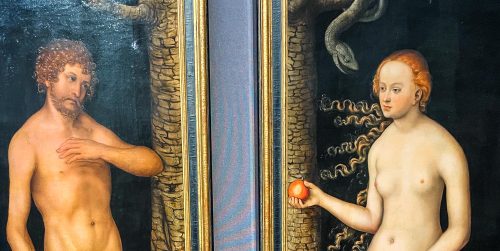
My second observation is that paintings in this museum carry on the observed German tradition of depicting Adam and Eve as redheads. I found the same in Frankfurt. https://gallimaufry.net.au/2018/06/29/frankfurt-beginning-of-the-2018-adventure/
We also wandered down the road to the Belvedere to see Gustav Klimt’s the kiss. Box ticked.

We also saw the Sisi Museum which was terrific and a good introduction to a sometimes-tragic life. We explored all the parks and looked at all the old buildings. Tried some Austrian Wine and generally went native.

Wandering around Vienna causes one to be confronted by many fountains. Some of the minor figures don’t seem to be enjoying their role
Reflection
Five days in Vienna is not enough if you really want to see all it has to offer. It is, however, enough to introduce you to the Austrian world and its colourful history and to see European history from the other side – not the French, German, English or Spanish. The Austrian Empire was a long-time influential player in Europe and, particularly through the influence of Maria Theresa, maintained a significant role in shaping the Europe of today. Austria, much diminished after WWI, still remains a powerful cultural force and a place of ideas. We are glad to have spent this time there.
Thanks Brian. Nothing like a bit of understated decoration around the odd palace. I have taken note of the size of the outline of St Stephan’s Cathedral and feel that any more than say 15 people inside at one time would make it almost impossible to move around with a modicum of freedom.